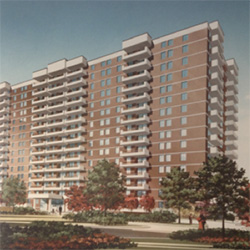
There are some steps that can be taken to reduce second-hand smoke in multi-unit housing. These could include:
Document and Track Second-Hand Smoke Issues
To effectively address second-hand smoke concerns, it’s essential to track both the source and impact using a detailed log. This documentation can help determine if the issue meets the legal threshold of nuisance—an unreasonable interference with the use and enjoyment of property.
Identify the Source of the Smoke
- Track how smoke is entering the unit:
- Through windows or doors
- Via bathroom or kitchen exhaust fans
- From electrical outlets or vents
- Through gaps between walls or baseboards
- Try to determine where the smoke is coming from:
- A neighbouring unit or balcony
- An outdoor smoking area
- Common areas (e.g., hallway, stairwell)
- Note when the issue began:
- Was the smoke present at move-in?
- Did it start after a new tenant moved in?
Track Frequency and Timing
- Record specific dates and times when smoke enters the unit
- Identify how often the issue occurs (daily, weekly, etc.)
- Note whether smoke appears at certain times of day (e.g., evenings, early mornings)
Measure the Impact
- Describe the amount and strength of smoke:
- Is it a faint smell or overwhelming?
- Does it stay in one room or spread throughout the unit?
- Document how the smoke affects your home use:
- Are certain areas unusable?
- Does the smell linger for extended periods?
- Does it disrupt sleep, health, or quality of life?
Understand Legal and Health Considerations
- Everyone has the right to reasonable enjoyment of their home
- Legal precedent (e.g., Hotel Corp. v. E.B. Eddy Forest Products Ltd., 1988) supports that second-hand smoke can constitute a legal nuisance, especially when it causes:
- Ongoing exposure
- Physical damage (e.g., odour absorption in furniture or walls)
- Proof of nuisance does not require intent or negligence—only that the impact is unreasonable
Report Violations in Common Areas
- If smoking occurs in indoor common areas (e.g., stairwells, lobbies, laundry rooms):
- Contact your local public health unit
- Violations fall under the Smoke-Free Ontario Act, 2017
- By law, no-smoking/no-vaping signs must be posted in all indoor common areas
Health impacts of smoke can be documented by:
- Writing down symptoms or illnesses caused by smoke, such as an asthma attack, headache, burning and watery eyes, sore throat, chronic coughing, bronchitis, ear infections and heart problems.
- Thinking about whether the smoke is making a pre-existing health problem worse. Some health problems that can be made worse by smoke include asthma, allergies, heart disease, high blood pressure, fibromyalgia, and cancer.
- Writing down whether smoke causes anxiety or fear because of the potential or actual health impacts. Babies who are exposed to second-hand smoke have a higher risk of dying from Sudden Infant Death Syndrome (SIDS), so this is important to document.
Impact on use and enjoyment of unit can be documented by asking:
- Are residents unable to live in parts of your home at times because of the smoke?
- Are residents forced to stay out of certain rooms?
- Are residents unable to open windows or balcony door?
- Are residents unable to use balconies?
- Are residents unable to use fans or heating system?
- Are residents unable to use certain cupboards, drawers or closets?
- Have residents been forced to leave home on certain days or at specific times to avoid the smoke?
- Are residents’ friends and family members with health conditions unable to visit because of the smoke?
Collect other evidence
- Check the clauses, by-laws and policies. There may be by-laws or policies already in place about behaviours or nuisances.
- Obtain written proof from neighbours, friends and family about the amount and frequency of smoke entering units.
- Get a physician or healthcare provider letter confirming that exposure to second-hand smoke makes you or your family members sick, or makes an existing condition or illness worse.
Sealing units to reduce second-hand smoke transfer
- Use caulk or spray-in foam around plumbing, electrical outlets, phone jacks, fixtures, cracks and gaps
- Close windows and doors
- Weather-strip windows and install door sweeps
- Cover or block heating/cooling grilles
- Fill or patch cracks in walls and ceilings
- Insulate air spaces around plumbing pipes
Accessing and Improving Building Ventilation
Most buildings built after the mid-1960s have corridor ventilation systems designed to maintain positive pressure by pushing outside air into hallways and under doors, preventing odors from spreading. Older buildings rely on air leakage through cracks for ventilation. Many buildings also have exhaust systems in kitchens and bathrooms, either in-unit or centrally located.
If smoke is entering units under the front door from other units, the property manager could check the ventilation system to make sure that it is working properly. Sometimes the systems operate on a timer and the schedule may need to be adjusted.
- Inspect ventilation system operation and timers
- Clean/change filters
- Test bathroom/kitchen fans (e.g., tissue test)
- Repair/replace non-functioning fans
- Explore pressurization or HEPA-filtered ventilation options
- Consult on restricting air from smoking units
While improved ventilation can reduce smoke odour and irritation, no system can eliminate exposure to harmful chemicals in second-hand smoke to a safe level.
Speak with residents
- Talk to the person who is smoking. They may not realize that the smoke is a problem for you. Focus on solutions such as asking the neighbor to smoke outside.
- Share information about second-hand smoke in condo newsletters orwebsite for residents.
- A survey of residents about second-hand smoke exposure and interest in a no-smoking policy for the condominium could be conducted to determine how to move forward.
Speak with the condominium board
This could include:
- Discussing or asking for a discussion about a no-smoking policy (which could include declarations and rules) at the condo board of directors meeting or annual general meeting.
- Forming a smoke-free committee to work on the issue.
If the board of directors is not supportive of moving forward with a no-smoking policy, another option is to call an owners meeting. For more information, refer to Condominium Authority of Ontario, the Condominium Act, Canadian Condominium Institute or reach out to a legal professional with expertise in condominium law.
Other steps that can be taken if second-hand smoke is an ongoing problem:
- Write a complaint letter to the condominium corporation requesting they take action.
- Provide documented evidence about the source of the smoke, frequency, duration, health impact and the impact on the use and enjoyment of the unit.
- Include other supporting evidence such as a physician or healthcare provider letterabout health impacts or letters from friends and neighbours that confirm the problem.
- Identify steps taken to resolve the problem to date.
- Propose possible solutions and ask for a response by a specific date (by-laws may specify a timeframe for responses to complaints).
Keep all communications with the condominium corporation, property manager or resident. If the corporation fails to act, evidence that they knew about the problem, were warned that it was a significant issue and refused to take steps to address the problem will be important.
Request condominium rule enforcement procedures be initiated
Nearly all condominium corporations have rules that ban behaviour that creates a nuisance or hazard to another person. This can include smoking, regardless of whether the condominium corporation has a formal no-smoking rule in place.
If a solution cannot be reached with the person(s) who smokes, and there is evidence that significant issues are caused by the smoke, the corporation has the authority to inform the person who smokes that they are in violation of the rules and must stop the behaviour that is causing the problem. Condominium corporations have a duty to enforce their rules, including passing enforcement records up to and looking for help in court if necessary.
Condominium owners should also note that section 117 of the Condominium Act, 1998, “Dangerous Activities,” is a potentially useful clause that could be explored.
If a condo corporation refuses to act or smoke cannot be reduced or eliminated to a suitable level, there are a few last resort measures that can be taken. Before taking formal steps such as opening a lawsuit, it is recommended that you seek legal advice.
Requisition (call) a meeting
- If the board of directors is unwilling to address an issue, owners can call a meeting with written support from 15% of eligible unit owners.
- Voting on by-laws and rules at the meeting can occur, provided it follows Sections 46 – 53 of the Condominium Act, 1998.
Initiate dispute resolution procedures
- If evidence that second-hand smoke is causing significant issues in the use and enjoyment of your home, you can try to force the condominium corporation to enforce its own clause, rules or by-laws under section 132 of the Condominium Act, 1998. Pursuant to this section of the Act, parties shall submit to mediation and arbitration to settle disagreements.
- Pursuant to section 134 of the Act, if the corporation fails to act following mediation and arbitration, condo owners can make an application to the Superior Court of Justice for an order enforcing compliance with any provision of the Act, the declaration, the by-laws or the rules.
- Condo owners also have the choice to sue the neighbour who smokes for an outcome banning the person(s) from smoking in their unit.
However, this issue is not black and white, and it is recommended that you seek legal advice if faced with applying to court to enforce a nuisance violation caused by smoking.